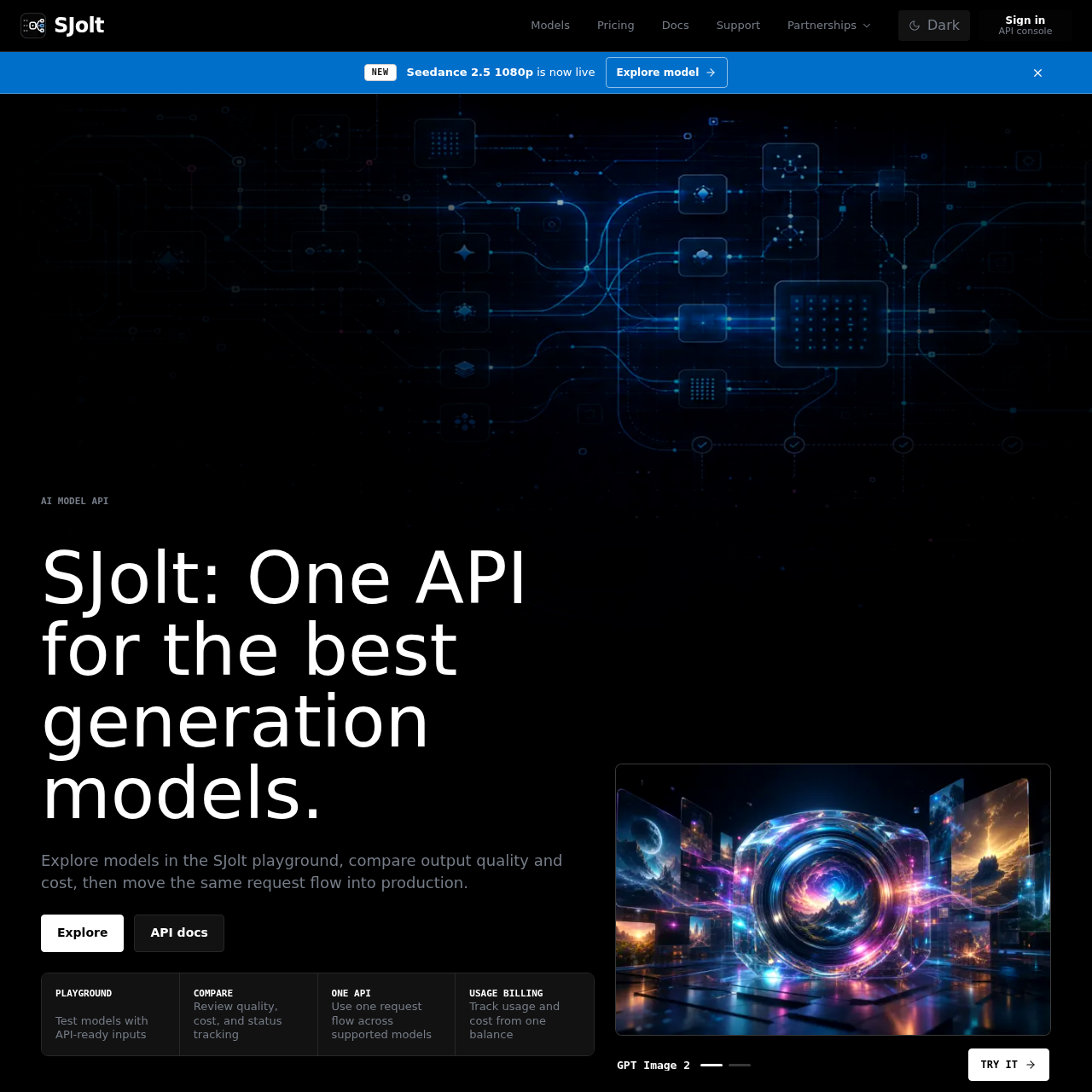
SJolt's overview
SJolt is an API for image, video, and audio generation models, designed for product teams, developers, and creators. It provides a platform to explore, compare, and integrate various generation models into their products.
What You Can Do With SJolt
- Model Aggregation — Aggregate image, video, and audio generation models in one place, making it easier to find and integrate the right models for specific use cases.
- Unified API — Use a single API request flow across supported generation models, simplifying the integration process and reducing development time.
- Playground Testing — Test models with API-ready inputs in the playground, allowing for experimentation and validation before integrating the API into production.
- Unified Billing — Track usage and cost from one balance, providing a clear and consolidated view of expenses related to generation model usage.
- Async Status Tracking — Monitor the status of long-running jobs through async queues, enabling efficient tracking and retrieval of results.
- Code Reusability — Reuse the same API request and result retrieval flow from the playground to production, streamlining the development process and minimizing code duplication.
SJolt's Key Features
🔥 One API Request Flow
⚡️ Model Catalog
✨ Async Status Tracking
🚀 Usage Billing
SJolt's FAQ
What is SJolt used for?
SJolt is used for image, video, and audio generation model aggregation for product teams, developers, and creators.
Can I use the same API request for different models in SJolt?
Yes, SJolt uses one request pattern across supported generation models, with model specific pricing and task parameters.
How do I test a generation model in SJolt before integrating the API?
You can test a model in the SJolt playground, which uses the same fields as the API request, allowing you to move prompts, ratios, durations, and model IDs directly into code.
What types of generation models are supported by SJolt?
SJolt supports generation workflows such as image generation, video generation, image to video, and image editing, organized by task, inputs, outputs, and status tracking in the catalog.